
When you sign up for a free OnlyFans page, the platform may place a temporary hold on your payment card even though the subscription price is $0. This article explains what that hold is, why it happens, how long it lasts, and how to read it on your statement.
A card hold is not a charge. It is a reservation of funds that the payment processor places to confirm the card is valid and has enough available balance to support future transactions. Most free pages require a card on file because the account can later send pay-per-view messages and receive tips, which are separate from the subscription itself.
Readers often confuse the hold with a subscription fee. The distinction matters because a hold usually disappears on its own, while a real charge must be refunded or cancelled. Understanding the difference prevents unnecessary disputes with your bank.
Hold basics
A card hold, sometimes called an authorization hold or pre-authorization, is a temporary reduction in your available balance. The money never leaves your account in the sense of a completed payment. Instead, the issuer sets it aside until the merchant either captures the amount or lets the authorization expire.
Platforms use holds at signup for several practical reasons. They verify that the card is active, that the billing details match, and that the account is not being created with a stolen or empty card. The same method is common across subscription services, not just adult platforms.
The table below compares the concrete values covered in this article so you can see the range at a glance.
| Item | Value |
| Paid subscription range | $4.99 minimum to $49.99 maximum |
| Typical paid page price | $4.99 to $15 |
| Average paid page price | $5 to $10 |
| Free page subscription price | $0 |
| Platform fee on all revenue | 20% |
| Creator share | 80% |
There is no base price below $4.99 on the platform. Only promotional first months may dip below that figure, and those promotions are set by the creator, not by the platform.
Tip: If you see a pending amount on your statement after a free signup, wait for the release window before contacting your bank. Filing a dispute too early can lock the authorization in place longer than a normal expiry.

Hold amount and timing
Hold amounts vary by issuer and by the payment processor handling the transaction. A common pattern is a small fixed amount used only to validate the card, followed by a release once the check completes. Some issuers show the hold as a pending line for several business days.
Timing depends on three factors: the card network, the issuing bank, and whether the merchant captures or voids the authorization. Most holds clear within a few business days, but weekends and holidays can extend the window because banks process pending items on business days only.
The table below maps typical hold behavior to release windows so you can compare what you might see.
| Stage | What happens |
| Signup moment | Authorization placed, balance reduced temporarily |
| Verification pass | Hold voided or allowed to expire |
| Verification fail | Hold may remain until issuer drops it |
| Typical release window | A few business days |
If the hold is still visible after a week, the cause is usually on the issuer side rather than the platform side. A quick call to your bank can confirm whether the authorization is still open.

Free vs paid signup
The subscription price on a free page is set to $0. That does not mean the account has no payment method attached. Creators on free pages earn through pay-per-view messages and tips, and those transactions require a valid card on file.
On a paid page, the signup triggers a real charge at the listed price. The paid range runs from $4.99 at the minimum to $49.99 at the maximum, with most pages sitting between $4.99 and $15 and averaging $5 to $10. A paid signup produces a captured charge, not just a hold.
Here are the concrete items that differ between the two signup paths.
- Free page: subscription price is $0, card used for verification and later purchases.
- Paid page: subscription price is charged at signup within the $4.99 to $49.99 range.
- Free page: earnings come from pay-per-view messages and tips.
- Paid page: earnings come from subscriptions plus pay-per-view and tips.
- Both: platform fee is 20%, creator keeps 80%.
- Both: a card must remain valid for future transactions.
When a creator raises the subscription price, auto-renew stops. Existing access lasts until the current paid period ends, which means the change does not cut off a subscriber mid-cycle.
What your statement shows
Statement descriptors rarely say the platform name in plain text. Processors use abbreviated billing names that can look unfamiliar, and the pending line may include a city or a code instead of a brand.
A pending line is different from a posted line. Pending items reduce available balance but are not final. Posted items are completed transactions that require a refund or cancellation to reverse. For a starting point, is there free only fans accounts collects free pages.
Use this list to read the common descriptor patterns.
- Pending line with a small amount: usually an authorization hold.
- Posted line matching the subscription price: a captured charge.
- Posted line labeled as a message or tip: a pay-per-view purchase.
- Duplicate pending lines: often one authorization per attempt, each expires separately.
- No descriptor at all: check the pending section rather than the posted section.
If two pending lines appear after one signup, the issuer may have authorized the same request twice. Both should expire without becoming charges.
Prepaid and virtual cards
Not every card behaves the same way during a hold. Prepaid cards, virtual cards, and debit cards each handle authorizations differently, and the difference often explains why a free signup fails while a paid one succeeds.
Prepaid cards are the most likely to reject a hold because the issuer may require a minimum balance above the authorization amount. Virtual cards from banks usually behave like the underlying debit or credit card, but some virtual card products block recurring billing entirely.
Review this list before trying a card type for the first time.
- Prepaid card: may decline if balance is close to the hold amount.
- Virtual card: often works, but recurring billing rules vary by issuer.
- Debit card: hold reduces available balance immediately.
- Credit card: hold reduces available credit rather than cash.
- Gift card: usually not accepted for subscription billing.
If a card keeps failing, the issue is usually the card type rather than the account. Trying a standard debit or credit card resolves most signup failures.
Failed verification
A hold can look wrong when verification fails partway through. The card may be valid, the details may be correct, and the hold may still stay pending because the issuer never received a void instruction.
Address mismatches are a frequent cause. If the billing address on the card does not match what was entered, the authorization may sit open while the processor waits for a correction that never comes.
Check these items when a hold appears to be stuck.
- Billing address matches the card issuer record exactly.
- Card has not expired and is not reported lost.
- Available balance or credit exceeds the hold amount.
- Issuer allows recurring or subscription billing.
- No duplicate account already using the same card.
Each of these checks is quick, and one of them usually explains the problem. Fixing the cause lets the next attempt complete normally.
After the hold
Once the temporary charge clears, the account is normally active and the card remains on file for future transactions. No further action is needed unless you want to remove the payment method.
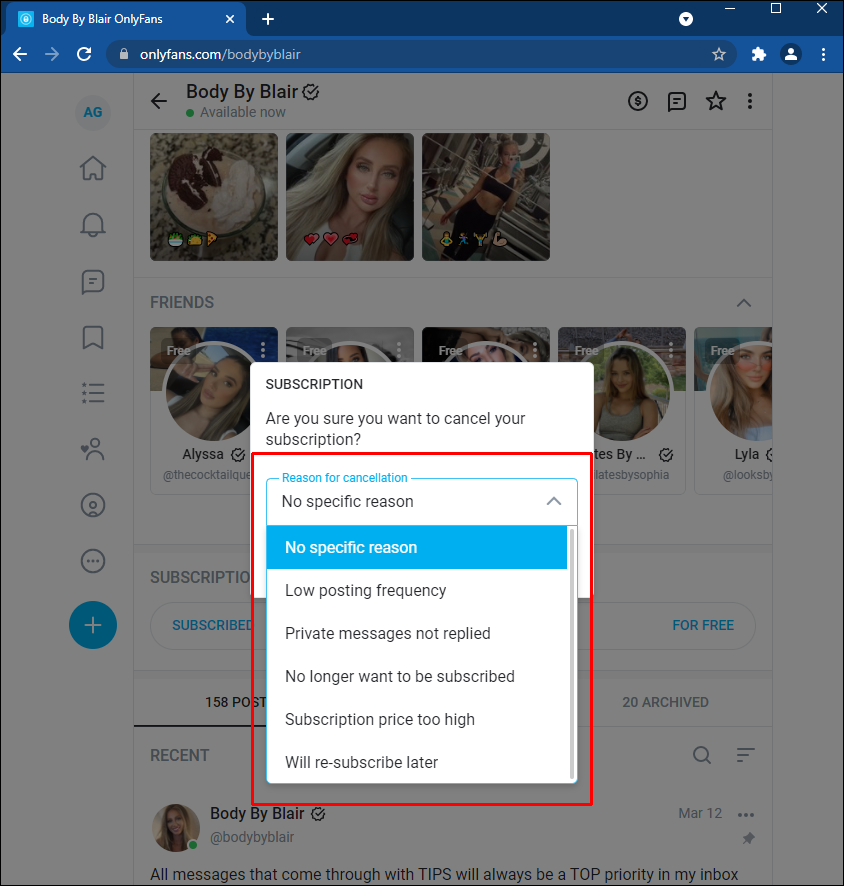
If you plan to stay on the page, nothing changes. If you plan to leave, cancelling the subscription stops future renewals but does not always remove the card from the account. Removal is a separate step in the settings.
Use this list for the steps that follow a cleared hold.
- Confirm the pending line is gone from your statement.
- Check the account shows the correct subscription status.
- Remove the card if you do not plan to make purchases.
- Cancel the subscription to stop future renewal.
- Keep the confirmation in case a later charge needs review.
Ranking sites exist because the platform has no built-in discovery feed or directory. Subscribers rely on outside lists to find pages, and creators rely on those lists for visibility. If you are comparing options, is there free only fans accounts is a useful starting point. BestOnlyFans publishes similar rankings, and BestOnlyFans updates them as pages change. Checking BestOnlyFans alongside your own statement review gives a fuller picture of what a free signup actually costs.
FAQ
Does a free page still place a card hold?
Yes. A card is required for verification even when the subscription price is $0, and a temporary hold may appear.
How long does the hold usually last?
Most holds clear within a few business days, though weekends and issuer processing can extend the window.
Why was I charged $4.99 on a free page?
A $4.99 charge is not a free subscription. It is likely a paid page at the minimum price or a pay-per-view purchase.
Can I remove my card after signing up?
Yes. Removing the card is a separate settings step and does not cancel an existing subscription on its own.