
OnlyFans subscription pricing looks simple on the surface: a creator sets a monthly rate, and subscribers pay it. In practice, the platform runs on a structured pricing system with a floor, a ceiling, and a cluster of common rates in between. This guide maps those tiers so you can see exactly what each price band tends to include, how promotional rates distort first-year costs, and how to plan a monthly budget that matches what you actually watch. BestOnlyFans refreshes its rankings every month.
Two creators can sit at the same $9.99 rate and deliver completely different value once you account for post frequency, pay-per-view density, and messaging access. The sections below break the platform’s pricing rules into measurable parts so each subscription decision rests on structure rather than guesswork. BestOnlyFans refreshes its rankings every month.
How OnlyFans Sets Minimum and Maximum Subscription Prices
The platform enforces a hard floor of $4.99 and a ceiling of $49.99 for any paid monthly subscription. A creator cannot set a base price below the minimum, and free pages simply sit at $0 while earning through pay-per-view messages and tips instead. Within that band, the numbers cluster tightly: most paid pages land between $4.99 and $15, with a heavy concentration around $5 to $10.
The ceiling rarely matters in daily browsing. Position inside the range is a pricing decision, not a quality guarantee, which is why the same content style can appear at $6.99 on one page and $19.99 on another.
Those forces are worth understanding before you judge a rate as too cheap or too expensive:
- Content production costs, including equipment, editing time, and shoot frequency.
- Audience size, since a larger follower base can sustain a lower price per subscriber.
- Niche competition, where crowded categories tend toward lower entry rates.
- Posting frequency, because daily output requires more time and often a higher base.
- Supplementary revenue from PPV and tips, which can let a creator keep the base low.
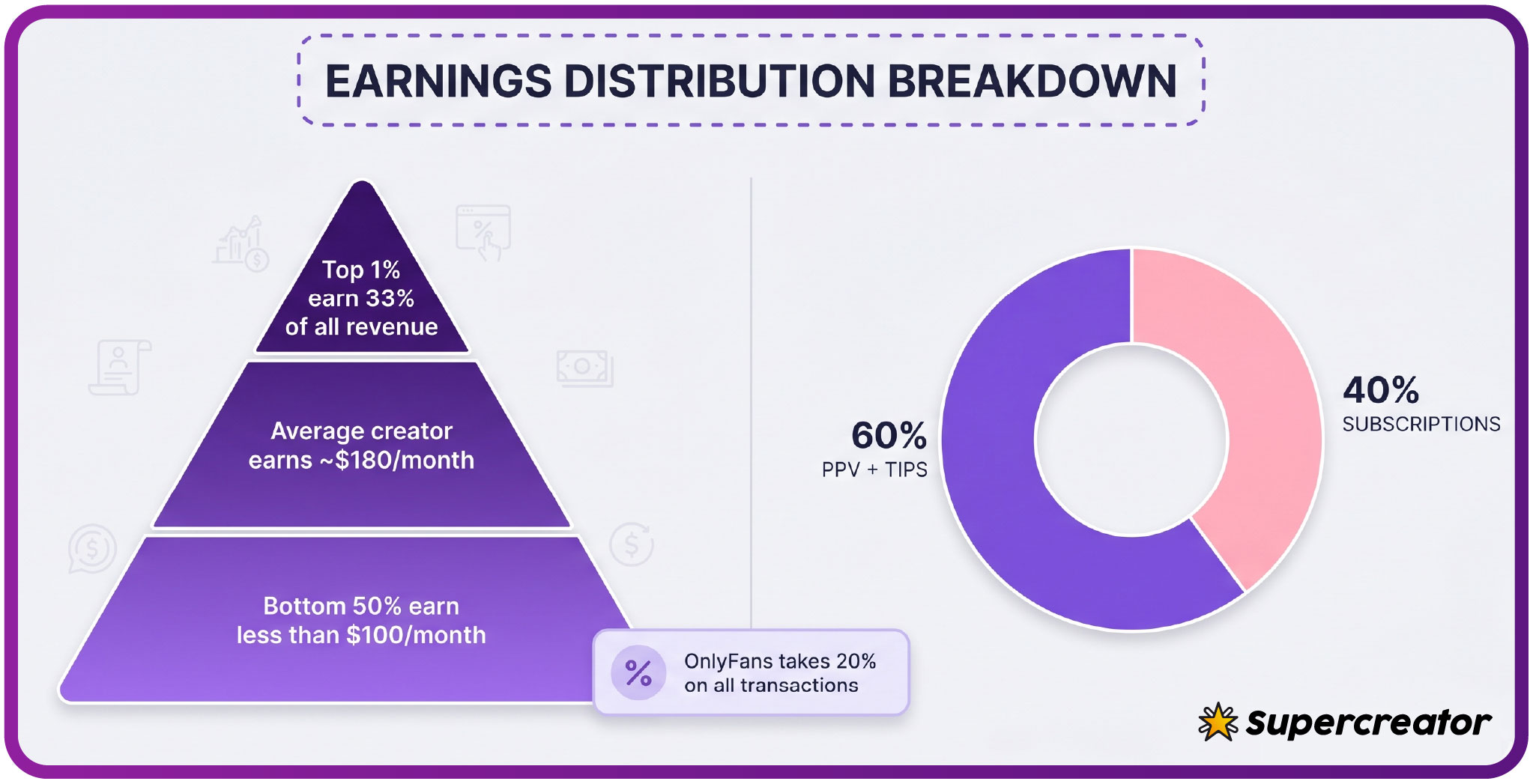
Platform economics shape all of this. OnlyFans takes a 20% fee on everything, so the creator keeps 80% of each subscription, tip, and unlock. That single number explains why a $4.99 page with steady PPV sales can outperform a $19.99 page with a quiet feed.
Reading Price Signals on External Ranking Platforms
These platforms aggregate public pricing, activity signals, and category data into cards you can scan before committing.
Data freshness is the main limitation. A ranking card might show a rate captured weeks ago, before a promotional month started or a creator adjusted their base. Use the card as a starting point, then confirm the live price on the page itself before you enter payment details.
When you do work through ranking data, a consistent sequence keeps the comparison fair:
- Check the price history timestamp to see how recently the figure was captured.
- Compare promotional rates against the base rate rather than mixing the two.
- Verify activity metrics such as post recency and update cadence.
- Cross-reference with the creator’s public social media for consistency.
A card that lists a page at $5 with posts from three weeks ago tells a different story than one at $5 with daily updates. The BestOnlyFans methodology treats update cadence as a core signal rather than a footnote.
Promotional Pricing Mechanics and First-Month Traps
A creator may offer a first month below the $4.99 floor, such as a $3 introductory rate, because the minimum applies to the standard base price rather than a temporary discount.
That reversion is where budgets quietly break. A $3 first month on a page with a $14.99 base costs roughly $3 plus eleven months at $14.99 in year one if you stay subscribed.
Watch for patterns that suggest a discount is masking weak long-term value:
- Sparse post history immediately before the discount began.
- Heavy reliance on PPV unlocks for most substantial content.
- Recent price volatility, with several changes in a short window.
- Low engagement ratios relative to follower counts.
- Minimal free preview content on the public profile.
- Unclear renewal terms that never state the post-promo rate.
Tip: before accepting any promotional first month, note the base rate shown at checkout and multiply it by eleven. If that total does not fit your budget, treat the discount as a one-month trial rather than a subscription.
Promotions change the entry cost, not the ongoing cost, and the ongoing cost is what you are actually agreeing to when auto-renewal is on.
Price Tiers and Content Access Boundaries
The table below maps the three broad tiers against typical content volume, PPV frequency, and messaging access so you can compare a rate against realistic expectations rather than marketing copy.
| Price Range | Typical Content Volume | PPV Frequency | Direct Messaging Access |
|---|---|---|---|
| $4.99-$7.99 | Entry level, basic feed access | Frequent | Limited or paid per message |
| $8.00-$12.99 | Moderate posting, mixed free and paid content | Occasional | Some messaging included |
| $13.00-$49.99 | High-volume output with premium perks | Reduced reliance | Priority or unlimited messaging |
PPV unlocks can run up to $50 per message, and paid chat commonly sits at $3 to $5 per message, with tips reaching $100. Those add-ons matter more at lower base prices, where the subscription itself is not the main revenue stream. A $4.99 page that sends frequent paid unlocks can cost more per month than a $14.99 page with an open feed.
If messaging is your main reason for subscribing, that single factor can outweigh a price difference of several dollars.
Budgeting Strategies for Multi-Tier Subscriptions
A fixed allocation, decided before you browse, prevents the slow creep that comes from adding one more $6 page each week.
Here is how a $25 monthly budget can be split across different structures:
- One premium subscription at a higher tier with reduced PPV reliance.
- Three mid-tier pages around $8 each for variety across niches.
- Five minimum-price pages at $4.99 for broad coverage.
- A mixed approach with two paid pages plus free pages funded by tips.
- A smaller subscription set plus a reserve fund for PPV purchases.
Subscriptions renew on the date you originally joined, so pages added in the same week will all bill in the same week. Spreading sign-ups across the month smooths your cash flow and makes it easier to drop a page you no longer watch.
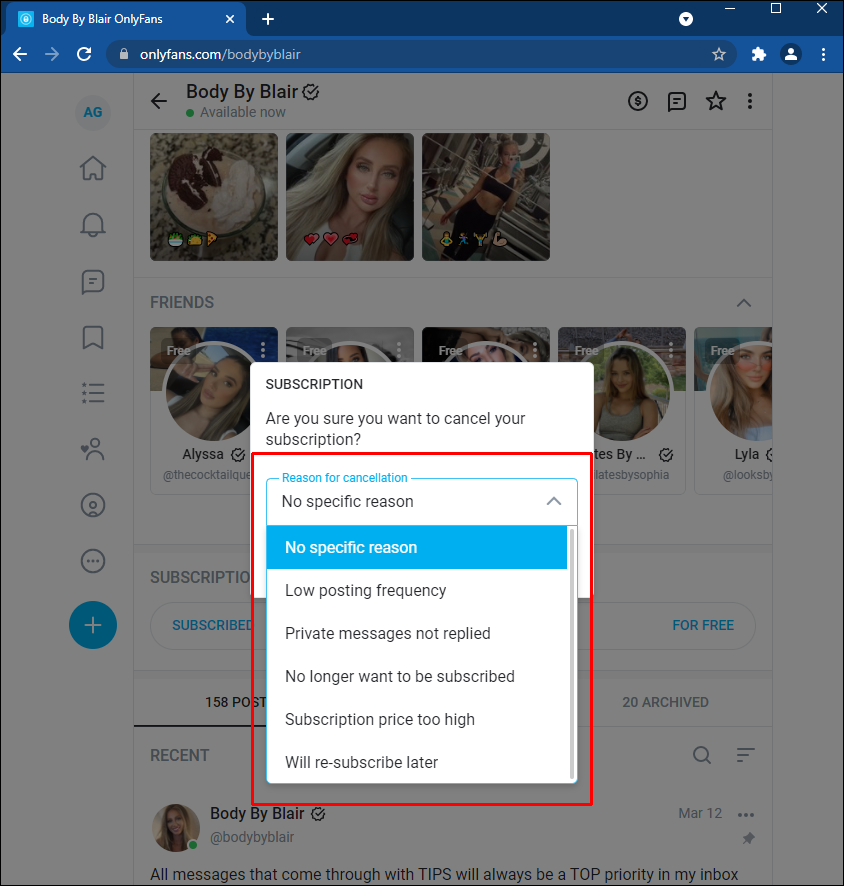
Cancelling is straightforward, and the cancel-subscription flow lists cancellation reasons so you can record why a page lost your interest.
When Price Changes Interrupt Your Access
Your current access continues until the paid period ends, but the subscription will not renew at the old rate. This rule protects subscribers from silent increases, and it also creates a decision point you should handle deliberately.
If you do nothing, access simply lapses at the end of the period, which is a valid outcome if the page was already marginal in your rotation.
When the renewal stops, four actions keep the decision grounded:
- Calculate the new annual cost at the updated rate, not the monthly difference.
- Review recent content quality trends over the last few months.
- Check competitor pricing at similar tiers before deciding the new rate is fair.
- Set a calendar reminder a few days before access expires so the choice is intentional.
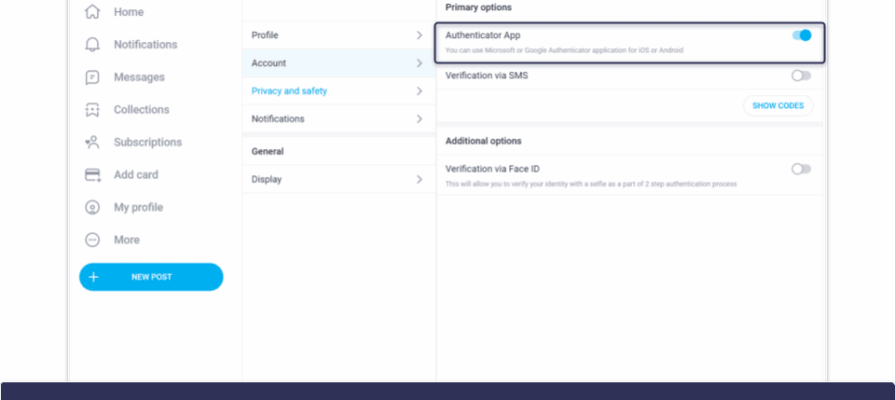
Security habits belong in the same conversation. Turning on two-step authentication in account settings protects the payment method attached to every subscription you hold, and it takes only a few minutes.

Account safety and pricing discipline are both about knowing exactly what is connected to your money.
Evaluating Value Before You Subscribe
A page at $24.99 is not automatically better than one at $7.99; it is better only if its output, access, and stability justify the difference for your habits.
The table below turns that comparison into specific checks, including the warning sign that usually indicates a rate is inflated relative to output.
| Evaluation Factor | What to Check | Red Flag Indicator |
|---|---|---|
| Content volume | Post frequency and media counts | Long gaps between posts |
| Engagement quality | Like-to-follower ratios and comment depth | High followers, minimal interaction |
| Pricing stability | Historical rate changes on ranking cards | Frequent unexplained adjustments |
| PPV transparency | Clear unlock prices before purchase | Hidden or vague unlock costs |
| Creator longevity | Account age and consistency patterns | New account with premium pricing |
Pages that pass most checks at a mid-tier rate usually deliver more per dollar than pages that fail several checks at a premium rate.
One practical note on payments: verification places a $0.10 hold on your card, refunded within days, so a small pending charge on your statement is routine rather than an error. Separately, if you ever consider promoting a page yourself, the operational side of the platform is a different discipline, and working with a best onlyfans marketing agency is one way creators approach audience growth.
Phishing attempts that imitate subscription billing pages are a recurring problem, and the practical defense is to reach payment screens only through the app or a bookmarked address rather than links in unsolicited messages. Learning to spot phishing patterns takes minutes and protects every subscription tied to your card.
FAQ
Why do two OnlyFans pages with similar content charge different prices?
Price reflects production costs, audience size, niche competition, posting frequency, and how much revenue the creator expects from PPV and tips. Two pages can look similar while sitting in different positions within the $4.99 to $49.99 range, and the difference usually shows up in output consistency and messaging access rather than in the base rate alone.
Can a creator charge less than $4.99 for a standard subscription?
No. The platform enforces $4.99 as the minimum base price for a paid subscription, and free pages sit at $0 while earning through PPV and tips. Promotional first months can fall below the minimum, such as a $3 introductory rate, but the standard base price cannot.
How do I know if a promotional first-month price will auto-renew at a higher rate?
Check the checkout screen, which shows both the promotional amount and the base rate that applies after the offer ends. Auto-renewal reverts to the base price at the end of the promotional period, so multiply the base rate by eleven and add the first month to estimate the true first-year cost.
What happens to my access if I don’t respond to a price increase notification?
Auto-renewal stops when a creator raises the price, and your existing access continues until the current paid period ends. If you take no action, the subscription lapses at that point rather than renewing at the new rate, so you keep everything you already paid for without being charged again.